Eko Hari Purnomo Advances Food Innovation to Reduce Food Loss and Strengthen Food Security in Indonesia
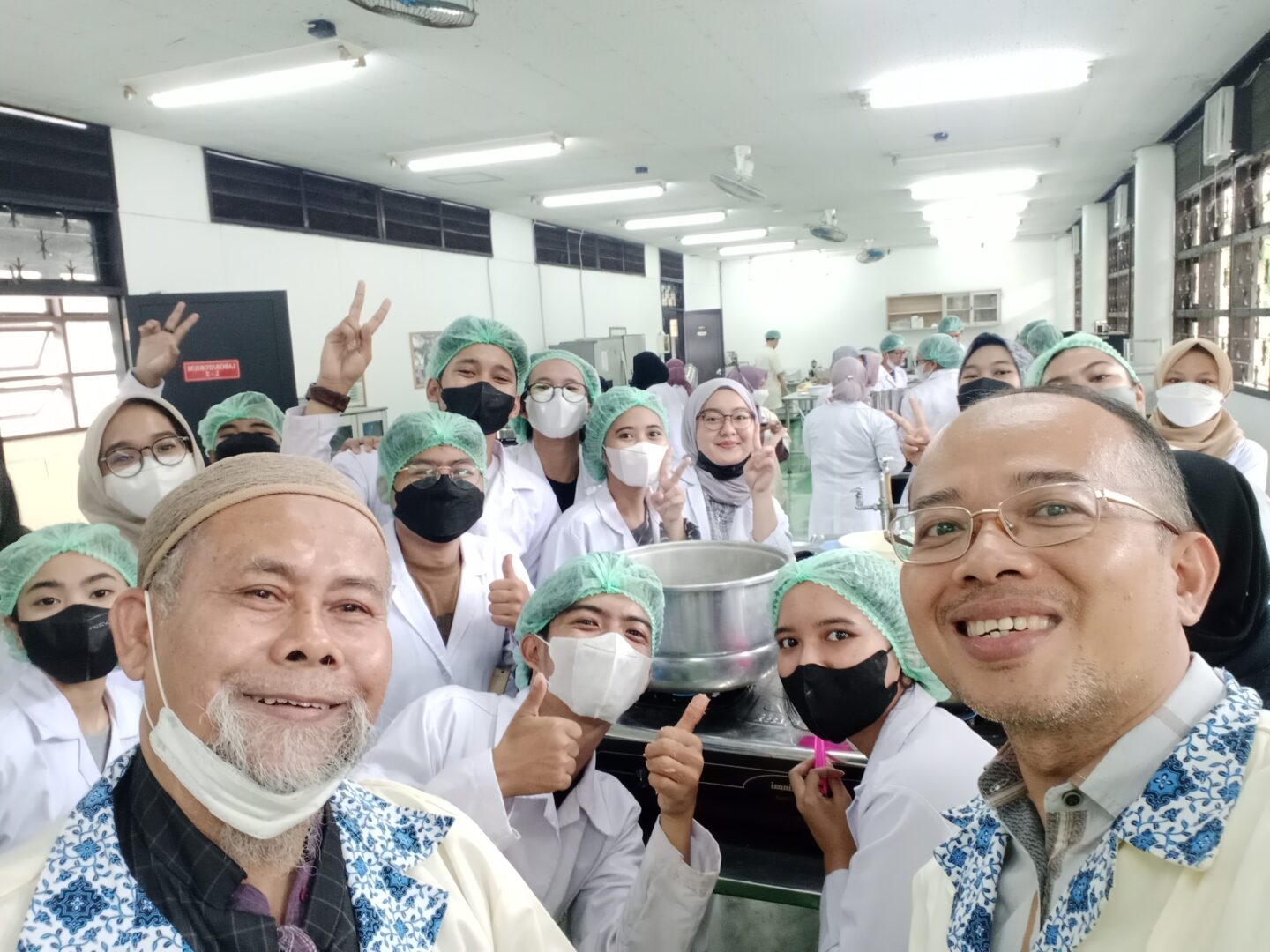
Eko Hari Purnomo poses for a group photo with his students after a food processing practice session at IPB's laboratory.
Through the Australia Awards Scholarships program, an initiative of the Australian Government, Indonesian food technologist Eko Hari Purnomo has strengthened his expertise in food science and innovation to help address food loss, food waste and food security challenges in Indonesia.
Tetra Tech is proud to support the delivery of the Australia Awards program, which promotes knowledge exchange, leadership and sustainable development outcomes across the Indo-Pacific.
Currently serving as the Head of the Department of Food Science and Technology at Institut Pertanian Bogor (IPB) in West Java, Eko brings over 25 years of experience in food technology, engineering and applied research. His work focuses on reducing food loss across the supply chain, enhancing food safety and strengthening local food systems to ensure food reaches those who need it most.
What motivated you to focus on food loss and food waste in Indonesia?
Food security is not only about increasing production. It is also about ensuring that the food we already produce is not lost or wasted before it reaches consumers.
In Indonesia, food loss occurs during harvesting, storage, transportation and processing due to spoilage, delays and pest infestations. Food waste happens at the consumption stage, when households, restaurants, or retailers discard edible food. If these issues are not addressed, they pose a serious threat to national food security.
Eko Hari Purnomo attends a scientific lecture at IPB
How significant is the food loss and waste challenge in Indonesia?
The scale of the problem is very large. A 2021 study by Indonesia’s National Development Planning Agency, the World Resources Institute, and Waste4Change found that food loss and waste reached up to 184 kilograms per person per year between 2000 and 2019.
That amount of food could have fed up to 125 million people, or nearly half of Indonesia’s population. These figures clearly show why reducing food loss and waste is just as important as increasing food production.
How does your work help reduce food loss and strengthen food systems?
My work focuses on optimising the entire food value chain, from processing and packaging to storage and distribution. I work with local food industries to help them produce food that is safe, nutritious, visually appealing and has a longer shelf life.
Food processing involves complex considerations. It is not just about efficiency, but also about food safety, nutrition and how food interacts with the human body. Packaging also plays a critical role in maintaining quality and preventing spoilage.
I also research food substitutions to promote dietary diversity, including alternatives to rice using locally available crops such as cassava and maize. These approaches can reduce reliance on imports while strengthening local food systems.
How did the Australia Awards Scholarship influence your career?
In 2003, I received an Australia Awards Scholarship to pursue a Masters degree in Food Engineering at the University of New South Wales. The program significantly strengthened my knowledge of advanced food processing and preservation techniques, which became central to my career.
Beyond academic learning, I gained valuable insights into communication and marketing during an internship in Australia. These lessons later helped me promote training programs and international collaborations when I worked in IPB’s International Collaboration Office.
The Australia Awards pre-departure training, particularly the English language classes, also had a lasting impact. It helped me communicate confidently with international partners and adapt to academic and professional environments in Australia.
Food technology expert Eko Hari Purnomo champions preservation and innovation to tackle food security issues.
Why is innovation critical in the food industry today?
Food is constantly evolving. Today, eating is not only about meeting basic needs, but also about health, quality and sustainability. This shift became especially evident during the COVID-19 pandemic, when the food sector remained resilient while many other industries struggled.
Innovation is essential to ensure food systems can meet changing consumer needs while reducing waste and improving safety.
How does physics contribute to improving food safety and reducing waste?
Physics plays an important role in food technology, from understanding texture and consistency to ensuring effective sterilisation processes.
My research focuses on non-thermal food preservation technologies, particularly pulsed high-voltage electric fields. Unlike traditional heat-based processing, these methods can inactivate harmful microorganisms while preserving nutritional value, texture and appearance.
Thermal processing can reduce food quality, whereas non-thermal technologies offer a promising alternative for extending shelf life without compromising safety or nutrition.
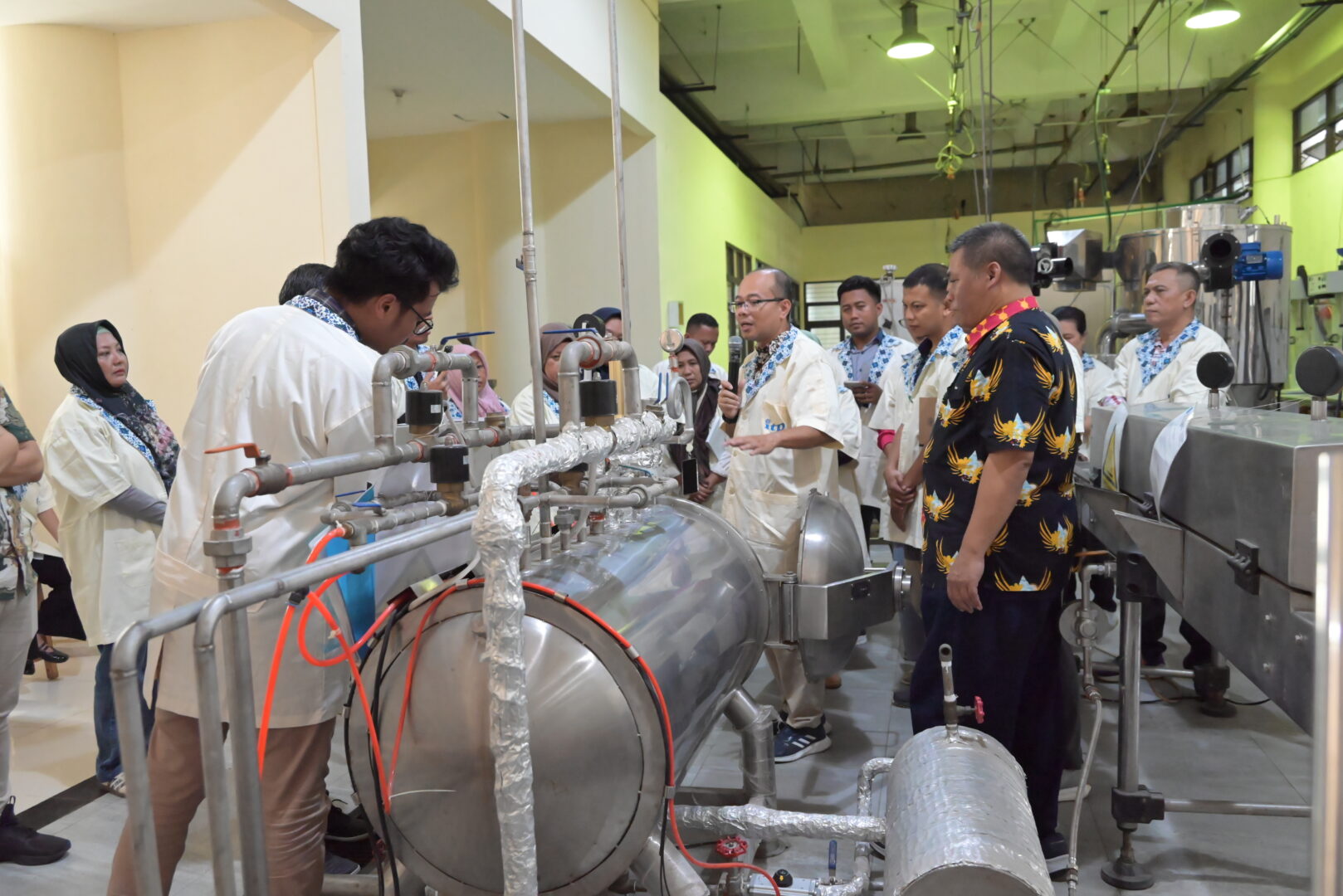
Eko Hari Purnomo explains the commercial sterilisation process (canning) used to preserve fresh ingredients for food industry practitioners during a training session held by IPB
What impact could this research have in Indonesia?
Food safety remains a significant challenge in Indonesia, marked by issues such as the misuse of chemical preservatives and recurring cases of food poisoning. By advancing safer and more effective preservation technologies, we can reduce food loss, improve public health and increase consumer confidence.
My goal is to scale this research so it can be applied commercially and contribute directly to national food security efforts.
What continues to drive your work?
I am driven by the belief that reducing food loss and food waste is one of the most effective ways to strengthen food security. By combining science, innovation and collaboration, we can build more resilient food systems and ensure that the food we produce truly benefits communities.
Eko Hari Purnomo participates in a panel discussion